Unit 2 Test 2 Review Geometry if M7 = M3
K-factor Calibration Pattern
Caution!
K-values for Linear Advance 1.0 and 1.five are not uniform.
Linear Accelerate one.0 is used in Marlin 1.i.8 and earlier.
Linear Advance one.5 is used in Marlin 1.1.9 and afterward.
Utilize this form to generate G-code that you can utilize to calibrate your Linear Advance Grand-gene. Default values apply to standard PLA with a 0.4mm nozzle.
Press the Generate G-code push button followed past Download every bit file to save the result.
Settings | G-lawmaking | ||
Printer Info | |||
| Diameter of the used filament (mm) | |||
| Diameter of the nozzle (mm) | |||
| Nozzle Temperature (°C) | |||
| Bed Temperature (°C) | |||
| Retraction distance (mm) | |||
| Layer Superlative (mm) | |||
| Extruder Index (0...) | |||
| Fan Speed (%) | |||
Impress Bed | |||
| Rectangular or round bed. Circular beds will activate Origin Bed Center | |||
| Size (mm) of the bed in X | |||
| Size (mm) of the bed in Y | |||
| Set the origin position (X0 Y0) to bed center instead of front-left corner | |||
Speed | |||
| Employ mm/due south instead of mm/min | |||
| Boring printing speed | |||
| Fast printing speed. This should differ noticeably from Slow Speed | |||
| Motion speed | |||
| Retract Speed of the extruder | |||
| Unretract Speed of the extruder | |||
| Gear up printing acceleration (mm/due south^two) | |||
| Set the Jerk for the X-axis. -ane to utilize firmware default | |||
| Prepare the Jerk for the Y-axis. -1 to use firmware default | |||
| Prepare the Jerk for the Z-axis. -1 to utilize firmware default | |||
| Set the Jerk for the Extruder. -1 to use firmware default | |||
Pattern | |||
| Select version 1.0 for Marlin one.i.8 and earlier. Select i.5 for Marlin 1.1.9 / 2.0 and up | |||
| Select standard or alternate pattern | |||
| Starting value for the One thousand-factor | |||
| Ending value of the K-cistron | |||
| Stepping of the M-factor in the examination design. Needs to be an verbal divisor of the K-gene Range (Terminate - Starting time) | |||
| Length of the Slow Speed test-line (mm) | |||
| Length of the Fast Speed test-line (mm) | |||
| Distance between the test lines. This volition bear upon print size | |||
| Adds a frame around the start and terminate points of the test lines. May improve adhesion | |||
| Rotates the impress in 45° steps | |||
| Prints the K-value besides every second test line | |||
Avant-garde | |||
| Ratio betwixt extruded line width and nozzle diameter. Should exist between 1.05 and one.ii | |||
| Offset the Z-axis for manual Layer adjustment | |||
| Level bed or load a saved mesh (i.e. for UBL) before printing. Bed leveling has to exist activated in Configuration.h! Loading a mesh requires UBL to exist activated! | |||
| Apply Firmware Retract. Needs to be activated in Marlin | |||
| Usually 1.0 | |||
| Prime the nozzle earlier starting the test pattern | |||
| The default of 2.5 results in roughly 1mm of filament for 10mm line length | |||
| Speed of the prime motility | |||
| Inserts a interruption of x seconds earlier starting the exam pattern to bleed off any residual nozzle pressure level | |||
| alert warning alarm | |||
Notes on the settings:
- Fast Press Speed and Slow Printing Speed should be significantly unlike or the K-factor issue will barely be visible.
- Apply Bed Leveling requires a probe.
- For round beds the pick Origin Bed Center is automatically activated.
- The overall width (10-direction) of the print depends on the Fast Speed Length and Tiresome Speed Length settings plus 5mm for the priming line. The length (Y-direction) depends on the Grand-cistron Settings and Line Spacing.
- The script checks to make sure the print fits on the bed. Verify it using a host software like Printrun or Repetier Host.
- Start and End Value for the One thousand-gene determines the range that the examination design will comprehend. For example a Get-go Value of l and an Terminate Value of 150 volition exam a range of 100.
- The K-gene Stepping determines how many examination lines are printed for the above range. For example, a Stepping of ten and a range of 100 results in 10 test lines. A stepping of 3 would not work in this example as 100 cannot be exactly divided by 3. The script will throw an fault message if an exact division is not possible. In this case either the range or the stepping needs to exist adjusted.
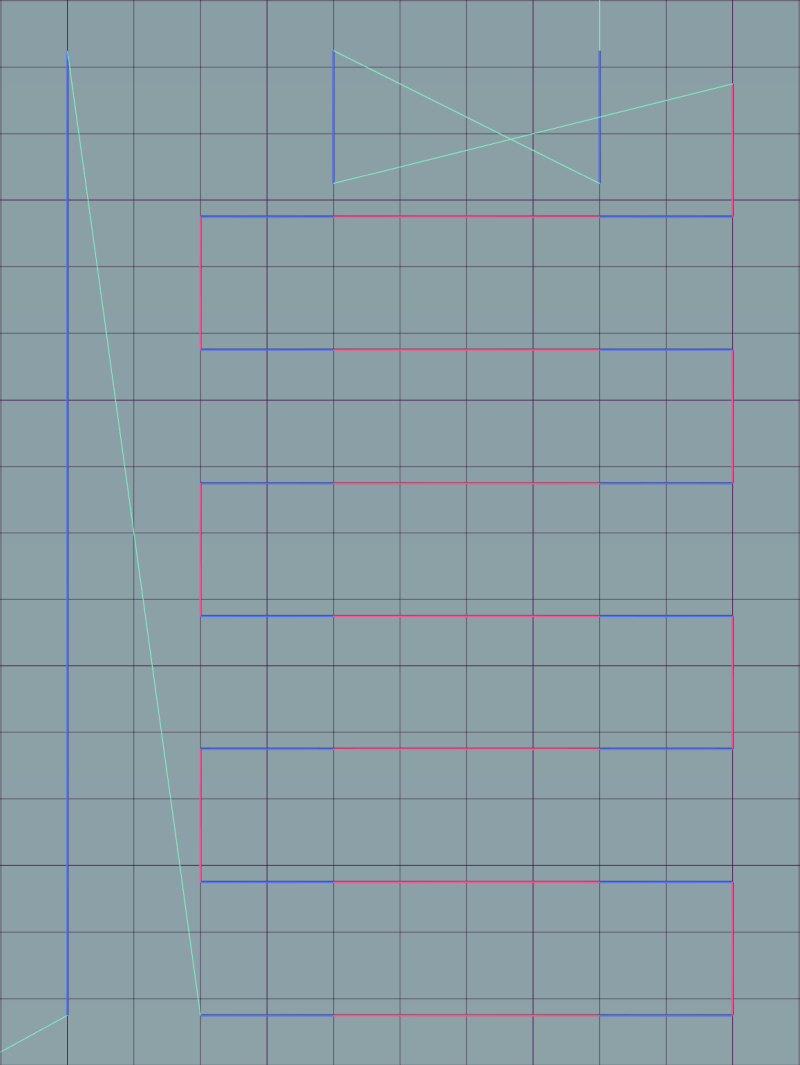
- The Alternate Pattern has a second line of Fast Printing Speed to exam 0 to Fast Printing Speed and dorsum to 0 weather. Best used with an increased Exam Line Spacing and reduced Chiliad-factor range.
- The proper K-factor depends on the filament, nozzle size, nozzle geometry and press temperature. If any of these values alter, the calibration might need to be repeated.
Screen-shots
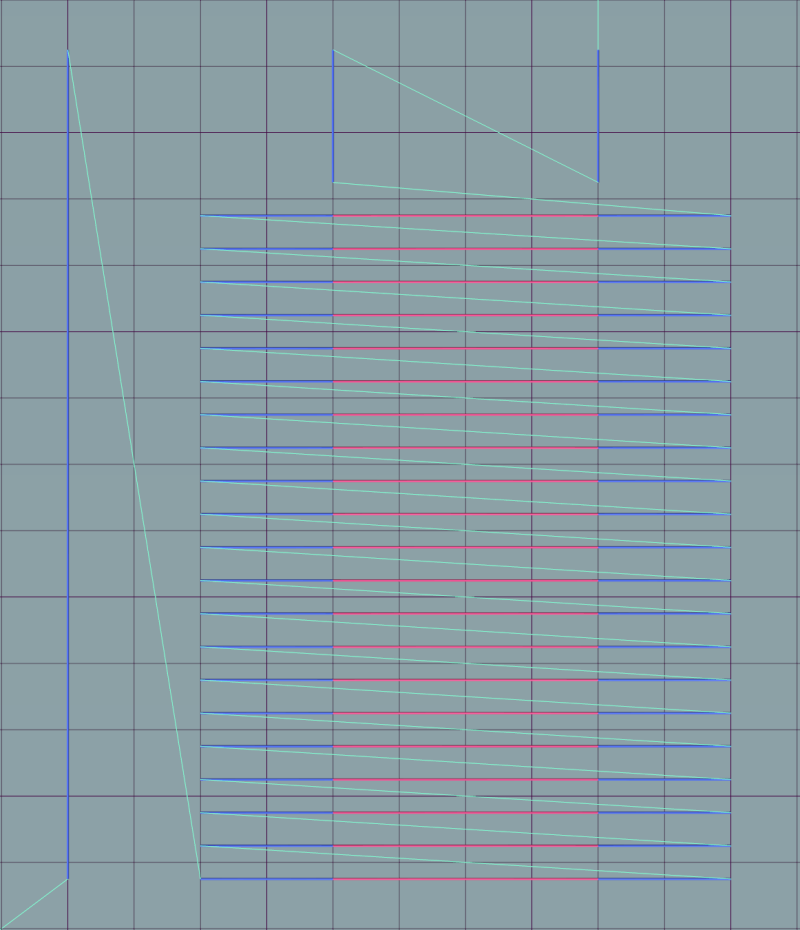
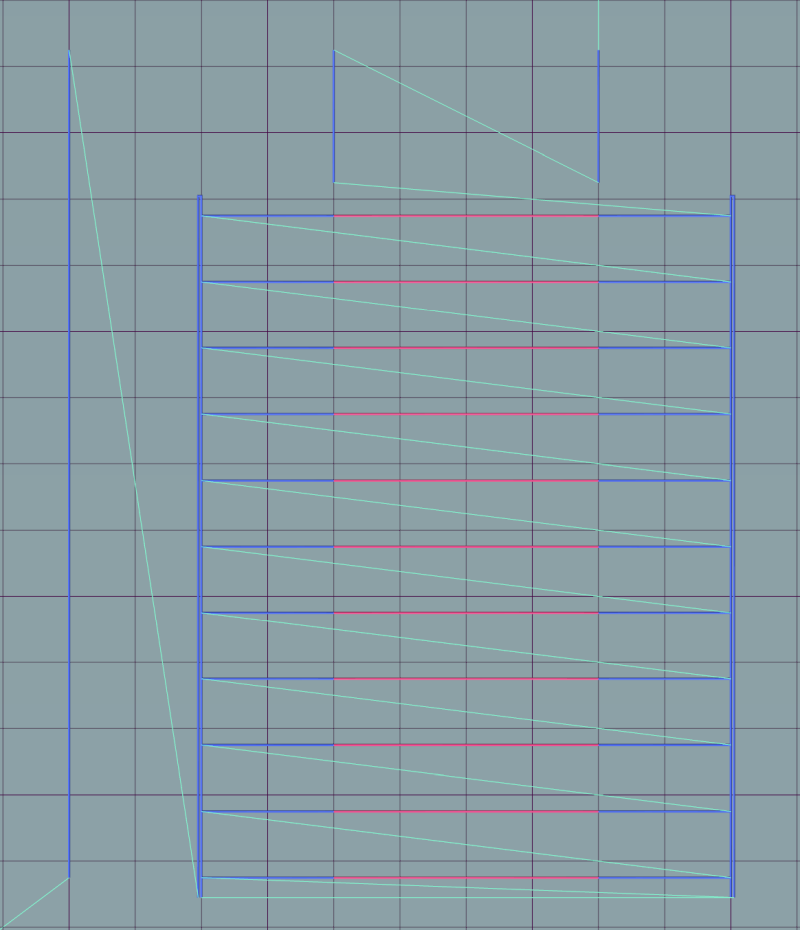
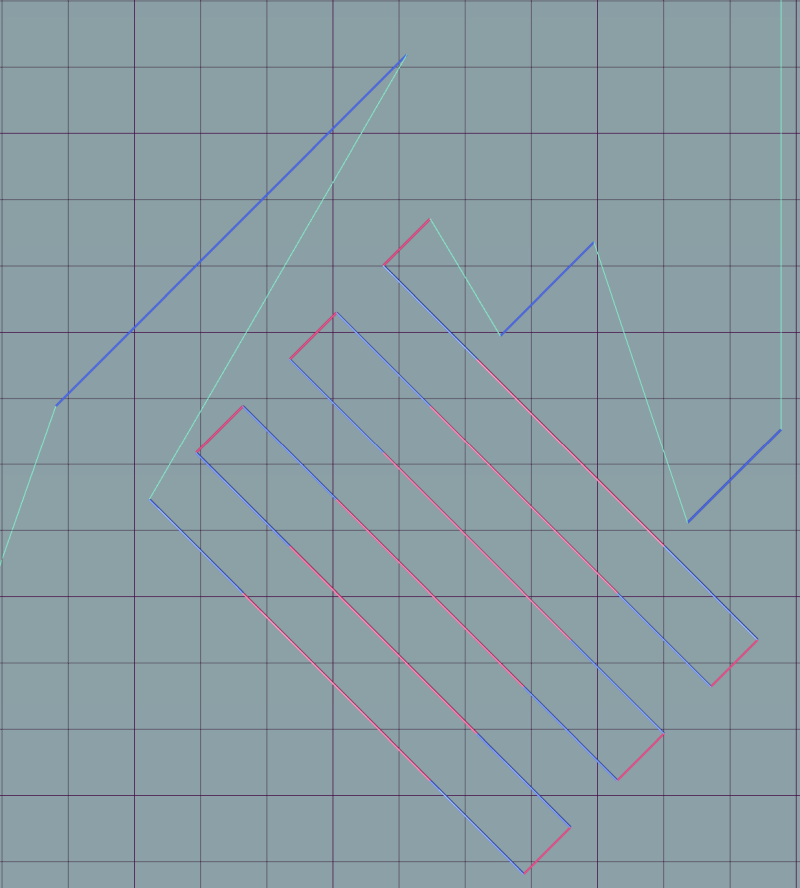
The following screen-shots show some examples of the test patterns
- Blue Lines are Ho-hum Printing Speeds
- Red Lines are Fast Printing Speed
- Light blue lines are movements
Standard Pattern
Standard Pattern with Frame
Alternate Pattern with increased Examination Line Spacing
45° rotated Alternate Pattern
Source: https://marlinfw.org/tools/lin_advance/k-factor.html
Belum ada Komentar untuk "Unit 2 Test 2 Review Geometry if M7 = M3"
Posting Komentar